Wednesday, September 16, 2009

"I'm desperate - help me Obi Wan" aka FANS TO THE RESCUE!


UPDATE: YOU PEOPLE ARE THE BEST!!!! I am seriously doing the happy dance because I have been getting some of the most awesome title suggestions from you. How is the committee ever going to decide? I am keeping this list for future reference because these are so good. THANK YOU, THANK YOU, THANK YOU! I will let you know what the decision is.


As most of you know, authors don't get to name their books very often. Hardly ever. But sometimes I've been lucky and suggested a title that sticks. It's such a thrill when this happens.

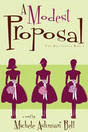
However, I am having a devil of a time coming up with a great title for the second book in my "Butterfly Box" series. The first book, "A Modest Proposal" was not my title, but it works. So far "the committee" has not liked any of my suggestions for the second book, and I have not cared for any of their suggestions. So, I'm opening it up to my clever and awesome fans. I want to turn it into a contest too.

So, here is a brief synopsis of the story and from that, I would love to take your title suggestions. If your title is chosen you will receive an acknowledgment in the front of the book by name and you will be the first person to receive the book when it is released, autographed, of course. I'd say we could go to lunch too but if you don't live here in the Salt Lake area, that won't work. However, if you live somewhere cool like Hawaii or the Bahamas, I may have to reconsider.

Anyway . . . here is a brief synopsis of the book.

Jocelyn Rogers moves to Milford Falls, Washington to live in the house her grandmother left her when she died. Joss is hoping that memories from 15 years ago have faded, memories of when she lived with her grandmother while she was in high school.
Milford Falls is a small, picturesque town filled with delightfully quirky people. Jocelyn is welcomed by the friendly townsfolk and she is grateful for their kindness especially when one of her pipes burst and floods her grandmother's house. She hires a man named Jack to help repair her plumbing and her walls. Even though they both fight it, they can't help the attraction that develops between them. To pay for the work though, she has to sell her most valuable possession, an original piece of art by her favorite artist.
Over the summerJocelyn spends time outside fixing up her grandmother's yard and with her neighbor's help, plants a large raspberry garden that was always her grandmother's dream. When summer ends Jocelyn begins teaching art at the local junior high school. She begins to really feel like she belongs, but memories from her past begin to haunt not only her but her friends Emma, Lauryn, Chloe and Andi. Is it connected to Ava's death? Are they also in danger?

There you go. I came up with the book, now you come up with the title . . . please! I only have a few days to send in suggestions. Anyone who wants to give it a shot, please get me your title before Sunday the 20th. I will submit my list on Monday the 21st.

Best of luck and . . . thank you!

Tuesday, September 15, 2009

BOOK SIGNING AND LIBRARY LECTURE TOUR


Here are some upcoming events and dates to put on your calendar.

I will be doing a Celebrating Sisterhood book signing at:
Seagull Book and Tape in Centerville, Utah on September 26th from 12:00 - 2:00 p.m.
I hope you'll join me for this wonderful event. There's always food and fun and, if you know me, chocolate!

Also, this month I begin my Library Lecture Tour. I will be speaking about, "Writing from the Heart." In this presentation I will provide information about the creative process of writing and how to structure a novel as well as how to get your work published. If you know anyone who is interested please pass this information along to them. Or, just come and say "hi" and join in the conversation.

September 22 - 7:00 KEARNS LIBRARY
September 23 - 7:00 WEST JORDAN LIBRARY
September 30 - 7:00 TAYLORSVILLE LIBRARY
October 6 - 7:00 HOLLADAY LIBRARY
October 13 - 7:00 DRAPER LIBRARY
October 14 - 7:00 BINGHAM LIBRARY
October 21 - 7:00 HUNTER LIBRARY
November 4 - 7:00 WHITMORE LIBRARY

Friday, September 11, 2009

Interview with Linda Weaver Clarke


Linda Weaver Clarke was raised on a farm surrounded by the rolling hills of southern Idaho and has made her home in southern Utah among the beautiful red mountains and desert heat. She travels throughout the United States, teaching a “Family Legacy Workshop” at libraries, encouraging others to turn their family history and autobiography into stories. Linda feels the importance of family legacy can never be over emphasized.

Clarke is the author of the historical fiction series, “A Family Saga in Bear Lake, Idaho,” which include the following novels: Melinda and the Wild West - a semi-finalist for the “Reviewers Choice Award 2007,” Edith and the Mysterious Stranger, Jenny’s Dream, David and the Bear Lake Monster, and Elena, Woman of Courage.

Here is my interview with Linda:

M.B.: Tell us about your current release and where you got the inspiration for it.

Linda: “David and the Bear Lake Monster” is the fourth novel in a series called A Family Saga in Bear Lake, Idaho. Each book has its own plot and can be read separately, but it’s nice to begin at the beginning and watch the characters grow up. I love romance so I add a new love story in each of these novels, which can be read by both teens and adults.

This book is all about deep-rooted legends, long family traditions, and a few mysterious events. David is trying to solve personal issues and overcome his troubles! He quickly becomes one with the town and its folk and finds himself entranced with one very special lady and ends up defending her honor several times. She isn’t like the average woman. Sarah is different. This beautiful and dainty woman has a disability that no one seems to notice. He finds out that Sarah has gone through more trials than the average person. She teaches him the importance of not dwelling on the past and how to love life. And how about the Bear Lake Monster? Does it really exist?

What was the inspiration behind the book? It was actually my great grandmother who was my inspiration. In fact, I dedicated this book to her. She became deaf at the age of one and was a very brave and courageous woman. She never let her deafness stop her from developing her talents. I took a lot of her experiences from her biography and gave them to my heroine to bring some reality into my story. To me, the experiences of my ancestors have always intrigued me.

Sarah was known as one of the most graceful dancers in town. She never sat on the sidelines at dances because of her natural ability. She was known for gliding across the floor with ease, with just a touch of her partner’s hand. Sarah had such agility and gracefulness, not only on the dance floor, but also while swimming and diving. People would actually throw coins in the water so they could watch her dive after them. They would applaud, letting her know how much they enjoyed watching her, and then throw another coin in the water.

An intruder actually hid in her bedroom under her bed, thinking he could take advantage of her since she was deaf. He must have thought she was an easy victim but was sadly mistaken. She swatted him out from under her bed with a broom, and all the way out of the house, and down the street for a couple blocks, whacking him as she ran. She was a spunky woman! Because of my admiration for my great grandmother, I named my character “Sarah.”

In my research about the “hearing impaired,” and talking to a dear friend who became deaf in her youth, I became educated about the struggles they have to bear. It was a surprise to find out that some struggle with self-esteem and the fear of darkness. I didn’t realize that concentrating on reading lips for long periods of time could be such a strain, resulting in a splitting headache. After all my research, I found that I had even more respect for my great grandmother and her disability. What a courageous woman!

The different accounts of the Bear Lake Monster, the names of the people who saw it and their contribution to this legend are found in the bibliography at the end of my book. The accounts were true, according to Bear Lake History. To read an excerpt, visit: http://www.lindaweaverclarke.com/samplechapters.html.

M.B.: When did you first know you wanted to be an author?

Linda: It all started while writing my ancestors’ stories. That was when I realized that I couldn’t stop writing so I turned to historical fiction. Since I had just finished writing their stories, it was still fresh in my mind. So I decided to add their experiences to my fictional characters to bring the story to life. Here’s an example. In my second book, “Edith and the Mysterious Stranger,” I based this story on the courtship of my parents. They didn’t meet the conventional way. They met through letters. She said that she fell in love with the soul of my father and they didn’t even know what one another looked like. The day they met, my mother told me that her heart leapt within her and a warm glow filled her soul and she knew she would marry this man. In my story, you don’t know who the mysterious stranger is until the end of the book. Some readers guessed right while others were pleasantly surprised. In the Author’s Notes, I tell my readers what is actually true. One thing I can tell you, being an author all started when I began writing my ancestors’ stories.

M.B.: What was the pathway like for you to get your first book published?

Linda: It was a miracle. No, a blessing! It only took me one year to find my publisher. I was turned down a few times with the statement: “This isn’t what we’re looking for.” But I wouldn’t give up because I believed my stories were good and would interest many people. When I finally found a traditional publisher, I was elated. At the time, I thought one year was a long time but have since found that was a short time compared to some.

M.B.: Were you ever discouraged along the way? If so, how did you deal with it?

Linda: Yes, very discouraged at times. After getting my first books published, I found out that it was difficult getting the word out to the public. I thought the publisher would do all the work but not so. I found that publishers expect the author to get out among the people and give lectures, get radio and television interviews, etc. I was surprised but have adapted quite well. My major in college was theater and music so that helped me a great deal with my “presence” on radio and TV.

M.B.: What is your writing schedule like?

Linda: I begin in the morning when I’m fresh and not worn out from the day. Then I insert cleaning the house or doing dishes in between to give my mind a break. I usually start at 9:00 in the morning until afternoon.

M.B.: Where do your ideas come from? How do you know the idea is
good enough to write a book about it?

Linda: My ideas come from every day life. Here’s an example: My first book, “Melinda and the Wild West,” was inspired by a true experience that happened to me as a substitute teacher. A former teacher labeled a young girl as a troublemaker and her classmates would not let her forget it. The teacher put her behind the bookshelves so she wouldn’t be a menace to anyone. A similar experience actually happened to my own daughter and my brother way back in the ‘50s. I wanted to tell this story but in the form of historical fiction, bringing out the importance of not labeling students, that negative labels tear down and positive labels build up. This book eventually won an award as one of the semi-finalists for the “Reviewers Choice Award 2007.”

M.B.: What words of advice do you have for other writers who desire to
have their manuscripts become books in print?

Linda: Never give up. If you believe in yourself, then it’ll come true. Be patient and continue writing until you find a publisher.

M.B.: What is your process of brainstorming a story? Do you just sit
down and write, waiting to see what happens next? Or do you outline
first?

Linda: I always outline my story first. That way I feel more organized. I list the things that I want to happen in my book and then check it off when it happens. Many times my characters will do things that I didn’t expect, though. And this really surprised me. I had gotten to know them so well, that I knew them deep down inside and knew how they would react to a situation.

M.B.: Do you ever experience a snag in a story, a form of writer's
block? If so, how do you deal with it?

Linda: I speak to my husband or one of my daughters and discuss what I’m trying to accomplish. I tell them what I’ve run up against, etc. They’ll give me good ideas and sometimes just talking makes a light go on in my brain.

M.B.: Do you need absolute quiet to write? Do you listen to music when
you are writing?

Linda: If I have music, it has to be soothing, without words. Otherwise, I would be typing the lyric of the song. I usually work in a quiet atmosphere, though.

M.B.: Who has made the greatest difference for you as a writer?

Linda: My husband has made the greatest difference in my life. He supports me in everything I do. He even comes with me on a few of my tours. Without his support, I could not be a writer.

M.B.: Which of your books is your favorite, and why?

Linda: There is something special about each one so this is hard. I believe it’s a toss up between the third and fifth book in this series. “Jenny’s Dream” was fun to write because the subplot is about Old Ephraim, the ten-foot grizzly bear. It was a blast to research and part of Idaho history. Not only that, I love the relationship between the husband and wife and the children.

In “Jenny’s Dream,” Jenny learns to forgive. This also comes from a family experience. Jenny has many dreams and wants to accomplish something remarkable in the world. She has read about the courageous women who were self-reliant, daring and determined such as Susan B. Anthony who fought for Equal Rights, an important part of American history. This was one of Jenny’s Dreams, to make a difference in the world. There is one thing standing in her way of focusing on her dreams, though. She must learn to forgive and put her past behind her. In this story, childhood memories begin bothering her and she realizes that before she can choose which dream to follow, she must learn to forgive those who have wronged her. She learns that forgiveness is essential to our well being, that we’re only hurting ourselves by not forgiving. This story is about accomplishing one’s dreams and the miracle of forgiveness.

While researching the last book, “Elena, Woman of Courage,” I absolutely fell in love with the 1920s language. The new generation spoke a language that their parents didn’t understand. They said words like: Cat’s pajamas! Ah, horsefeathers! Attaboy! Baloney! You slay me! When referring to a woman, they used doll, tomato, and bearcat. When a person was in love, they were goofy. If a person was a fool, they were a sap. And when a woman wasn’t in the mood for romance, she would say, “The bank’s closed.” I used this new language in my book and had so much fun with it.

When Elena settles into a strict conservative town as the newest doctor, a slew of problems begin to arise. The town is not ready for a female doctor, let alone one so strong and independent. Elena Yeates, the town’s newest doctor, must struggle to prove herself in this western town, while keeping her composure, poise, and femininity. As she fights to prove herself, the town’s most eligible bachelor finds it a challenge to see if he can win her heart. With the 1920’s rise of women’s rights, this novel gives you great insight at the struggles women had to go through, all the while watching a young love blossom!

M.B.: What are you working on now?

Linda: The Family Saga is now completed. The fifth book, “Elena, Woman of Courage,” was just released this week. So I’m now working on an adventure series called The Adventures of John and Julia Evans. I always enjoy putting a little history in each of my novels to educate my readers, even if it’s not historical fiction. The mysteries of the Anasazi Indians, the Mayas, Montezuma’s Treasure, and the Lost Dutchman Mine have intrigued archaeologists and scientists for many years. In the Adventures of John and Julia Evans series, I delve into such mysteries. This series isn’t historical fiction but set in now days. My editor listed it as a mystery/suspense with a bit of romance added for good measure.

M.B.: Any final words you would like to share

Linda: To those who are interested in writing their own “Family Legacy,” I wouldn’t put it off. The importance of family legacy can never be over emphasized. I believe we are the people we are because of our ancestors. Who are they and what were their traditions? Did they fight for a cause and what was it about? Each of us has a story from our ancestors or even our very own story to tell. If these stories are unwritten, then how are our children going to know of their parentage? It’s up to us to write these experiences down. We must record and share these stories with our children.

There are just a few things to remember. First, collect your thoughts; write down any experiences that you remember. Talk to family members and discuss memories. You can make several short stories, making the history into segments. Or you can write the whole history as a continuous flow. Your children will want to know their heritage, what their ancestors stood for. Make your Family Legacy something your children will remember, something they will be proud of.

Emotion is one example how you can make your story come to life. It’s the secret of holding a reader, the difference between a slow or dynamic recounting of a story. When you feel the emotion inside, so will your readers. By giving descriptions of emotion, it helps the reader feel part of the story as if he were actually there himself. It helps us feel satisfied because we can feel what the character feels. Emotion is part of our lives, so why ignore such an important element in a story? But remember: Show, don’t tell.

If an ancestor had to defend her home from marauders, how did she feel? If she were frightened, then her heart would be pounding against her ribs. If an outlaw challenged your great grandfather, what were his feelings deep down inside? If he were angry, did his face turn red with defiance? If your grandfather was faced with a grizzly bear in the wild, how did he react? If he were shocked, did his face turn pale and was he trembling with fear? These are questions that you must research. Find out all you can so you can tell your story. If your ancestor didn’t record his feelings, then imagine what it would be like in a given situation.

For those writing their own autobiography, don’t forget descriptions of love. You know what it feels like to be in love or to be loved, so describe it. Tell how you met your husband or wife and how it felt when you realized you were in love for the first time. Did your heart swell within, sending a warm feeling down your spine, and making you feel as if life was worth living? Remember, emotions are part of life and can be an essential part of your story.

After finishing a workshop in Boise, Idaho, a woman at the Historical Society Library said to my daughter, who comes along to assist me, “I felt as if I had handcuffs on my wrists and your mother has just unlocked them.” I was so touched by what she said.

For a sample of what you can do with your family histories, you can read the short stories on my website at http://www.lindaweaverclarke.com. That will give you an idea of what you can do.

M.B.: Where can our readers go to find your books and order them?

Linda: Amazon or on my website. Bookstores can also buy them from Baker and Taylor, one of the distributors.

Friday, September 4, 2009

Interview with Anita Stansfield


Anita Stansfield began writing at the age of sixteen, and her first novel was published sixteen years later. For more than a decade she has been the number-one best-selling author of women’s fiction in the LDS market. Her novels range from historical to contemporary and cover a wide gamut of social and emotional issues that explore the human experience through memorable characters and unpredictable plots. She has received many awards, including a special award for pioneering new ground in LDS fiction, and the Lifetime Achievement Award from the Whitney Academy for LDS Literature. Her forty-fourth book was released in August, 2009. Anita is the mother of five, and has one adorable grandson. Her husband, Vince, is her greatest hero.

Her newest release, "Shelter from the Storm" is volume 4 of the Jayson Wolfe Story. See also Sound of Rain, A Distant Thunder, and Winds of Hope volumes one, two and three in this series.


The first time I met Anita, she was speaking at a Romance Writers of America conference. I was immediately taken by her confidence, poise and persona. She had just blasted LDS romance into the stratosphere with her book "First Love and Forever." She truly paved the way for LDS fiction and became an iconic figure in the romance genre. This woman is gracious, passionate and talented, and I'm indeed lucky to call her my friend. I want to thank her personally for taking time out of her busy schedule to let me interview her.

Here is my interview with . . . Anita Stansfield.

M.B.: When did you first know you wanted to be an author?

Anita: My sister asked me to help her write a novel when I was sixteen. We weren’t very far into the project when I knew it was in my blood and I wanted it to be a career.

M.B.: What was the pathway like for you to get your first book published?

Anita: It was very challenging! I have more rejection letters than I can count, and there was a great deal of opposition. I finally signed the contract to get my first book published sixteen years from when I had begun writing at the age of sixteen. About ten of those years, I was writing equivalent to a full-time job, meaning that I put in an average of forty hours a week without making a penny. It was a long, hard road, but something in my spirit wouldn’t let me give up.

M.B.: Were you ever discouraged along the way? If so, how did you deal with it?

Anita: I was discouraged a LOT! The biggest thing that got me through was prayer and relying on the guidance of the Spirit. I prayed about the steps I took and did my best to follow my feelings and do what I believed was right in honoring my gift.

M.B.: What is your writing schedule like?

Anita: When I’m in that creative process, I write every minute I can while working around the needs of home and family, and other obligations. I don’t really have time set aside. I just write as much as I’m able until the story is out of my head. But I never write on Sundays.

M.B.: Where do your ideas come from? How do you know the idea is
good enough to write a book about it?

Anita: I’ve never started a book by saying, “I think I’ll write about . . .” I have to say that my story ideas are simply inspired. They just come to me, and sometimes they’re very overwhelming and consuming. They rarely come at a convenient time, and I just have to go with it to the best of my ability and try to honor that inspiration. I don’t think I’ve ever stopped to think, “Will this be good enough to sell?” I just have to write what comes to me and have faith that the story will serve a purpose, even if that purpose is simply a learning experience for me. While I’ve certainly incorporated a lot of real-life issues, I’ve never written from anyone’s real-life experience; not even my own. After I get an idea with a firm story structure, I often speak with people who have been through the challenges I’m writing about, which gives it that real-life edge. But the plots and characters are completely fiction, and always have been. The only exception is the book that I wrote about Emma Smith.

M.B.: What words of advice do you have for other writers who desire to
have their manuscripts become books in print?

Anita: Just write, write, write. I think we hold ourselves back because we have the mindset that we’re not a writer, or we’re not good at grammar, punctuation, etc. I wrote a few books before I really stopped to learn how to be a good writer. The result was that I learned to listen to the ideas that came to me and just write them. Writing in itself is emotionally therapeutic, for whatever reason you might be doing it. And like anything else, it naturally just gets better with practice. Also, writing is a right-brain process, and the editing is a left-brain process. Don’t try to do both at the same time. Just write, write, write. Then pray and follow your feelings to discover the right path for your writing.

M.B.: What is your process of brainstorming a story? Do you just sit
down and write, waiting to see what happens next? Or do you outline
first?

Anita: As I mentioned, the ideas just come. I’ve never done outlines. Sometimes I have to write down a timeline, and I will write down notes and ideas as they come, but that’s more in a chaotic kind of list. Sometimes, I need to talk out loud to a listening ear in order to work out certain plot or character issues, but I find I’m doing that less and less. I think that after writing more than thirty years, the process is becoming a little easier. Perhaps that just means I’ve had enough practice to be able to process my ideas more efficiently when they come.

M.B.: Do you ever experience a snag in a story, a form of writer's
block? If so, how do you deal with it?

Anita: Yes, snags certainly come up. I either talk them through with one of my friends, or I just keep disciplining myself to keep going until it works itself out. When my writing gets sluggish, it’s usually because I’m allowing myself to get caught up in distractions. If I just sit down and force myself to write (even if it’s text I’ll eventually throw out) it seems to eventually kick in and get flowing.

M.B.: Do you need absolute quiet to write? Do you listen to music when
you are writing?

Anita: To be a mother of five is not conducive to having absolute quiet. If I’d waited for quiet, uninterrupted hours, I never would have written a single book. I do ask my children to keep the noise to a certain level, and we have certain rules that apply while I’m writing, but interruptions and noise are just a part of motherhood. I absolutely have to listen to music when I write. The two are inseparably connected.

M.B.: What kinds of inspiration do you use during your story creation periods?

Anita: Music is a huge factor in my creative process. I learned accidentally many years ago that the music I was listening to would impact the story, so now I search for music that expresses the mood and emotions I’m writing about. I also use pictures of real people for my characters; actors, musicians, models, etc. It’s like casting an actor in a role, except I’m just using the face. So, I surround myself with audio and visual stimulation and just dig in. I’ve never been able to afford to travel for research, so I just have to try and create my own atmosphere.

M.B.: Who has made the greatest difference for you as a writer?

Anita: Charles Dickens. I’ve always felt a little strange or odd, even among other writers, until I read multiple biographies on Dickens, and I felt completely validated. I don’t know if that’s a good thing to admit, or not. I’m just grateful that I have things in my life he didn’t have. He was a very unhappy man, but his creative processes are fascinating to me.

M.B.: Do you use a critique group during the writing process? Why or why not?

Anita: I was actively involved in a critique group for many years during the time that I was trying to get published. It fizzled out before I actually sold my first book because our goals were all so different, but during the years that it worked it was very beneficial. I learned to be able to accept criticism, sift it through, and discern what was valid and what was not. I learned the importance of being able to defend something in your work that you believe in, even when others disagree or are unkind. I also learned to learn from others. We can never accomplish anything great completely on our own.

M.B.: Which of your books is your favorite, and why?

Anita: That’s a hard question; it’s like asking which of my children I love the most. I have tender spots for all of my books, although there are certainly some that are closer to my heart. Some of them were written very quickly and don’t have as much depth. The projects that took more time and commitment resulted in a deeper fulfillment, I believe. I’m very fond of the Hamilton family, but that doesn’t necessarily mean they are my favorite. My REAL favorite is a saga that is still unpublished which has no LDS content.

M.B.: Any final words you would like to share

Anita: My gift has brought many challenges and a lot of grief into my life, but I wouldn’t trade it for any other path. I love my gift! It has also brought many miracles and wonderful opportunities. I love being able to write stories that change people’s lives for the better. I’m especially grateful when I hear that a story has helped someone through something tough and helped them make better decisions. It’s also been a great privilege to see the missionary work that has been accomplished through my work.

M.B.: Where can our readers go to find your books and order them?

Anita: Mostly through LDS bookstores, or online through the same sources. My website is anitastansfield.com; readers can go there and sign up for regular newsletters and updates. Also, I have a couple of fan sites on Facebook where readers can go for discussions, updates, and contests. You’ll also find information there for a new blog being done by fans that should soon be up and running.

I would also like to add that I’m excited to be working on the screenplay for my first published book, “First Love and Forever.” The producer of “The Best Two Years” is working with Covenant to put the book on film. If all goes well, we’ll be filming next spring. Regular updates on this project will be posted in the places I mentioned previously.

http://deseretbook.com/item/5025377/Shelter_from_the_Storm#
http://www.amazon.com/s/ref=nb_ss_1_11?url=search-alias%3Daps&field-keywords=anita+stansfield+books&sprefix=anita+stans

Wednesday, September 2, 2009

Being a Light to Others - Choosing Happiness


The lighting apparatus in lighthouses is measured in candle power. The strongest lighthouse is located off the coast of Florida and is 5,500,000 candle power. That's a lot of candles!

Each one of us have a light inside of us. Sometimes that light burns bright and sometimes our light is dim. When it's bright we are able to shine for others and help those who might be struggling because their light is dim.

I have a dear friend who has worked in the retail industry for most of her adult life, basically since she graduated from high school back in 1976. I met her in 1987. She told me how much she wanted to get out of retail and get into a medical career. I told her to go to college, even if she could only take one class a semester and it took her ten years to finish. Or, she could go to a trade school and learn how to be a medical assistant. That was twenty-two years ago. She's still in retail and she's still complaining about it.

Each and every day we make hundreds of choices, beginning with the minute the alarm goes off. Should I snooze or should I get up? What should I wear today? What should I eat today? The list goes on. One of those choices is whether or not we are going to react in a positive way or a negative way to things that happen to us and the people we interact with during the day. Are you going to let that jerk who cut you off on the freeway ruin your day? Are you going to be offended by the church member who tells you they didn't agree with the comment you made in Relief Society? Are you going to be cranky all day because someone at work ate your Hot Pocket?

Innately I'm a pretty upbeat and positive person, but there are some days that it's all I can do to not bite someone's head off because I'm tired, or something hasn't gone right, or . . . a thousand other reasons. But we do have a choice in how we react. Problems happen, things don't always go right. We don't have to let it ruin our day, and we certainly don't have to take it out on everyone around us.

Soon after I was married I was talking to our Bishop's wife. She was an incredible woman and I admired her greatly. She told me something very wise. You can't depend on someone else to make you happy. The comment rang true in my heart. This truth is powerful, especially in marriage. We cannot expect our spouses to make us happy. That is not their job.

You can choose your emotions. True happiness comes from within. It cannot be forced upon us by someone else, nor can we force it upon someone. It is a choice, just like choosing what outfit you wear each day or what to make for dinner.

When you buy a new dress, or a pair of new shoes or earrings, you buy the ones that make you feel good or happy. You wouldn't buy a new dress that didn't fit right or make you feel good, right? So why in the world would would you choose emotions and feelings that didn't make you feel good?

Guaranteed, you will have things happen that will make you angry or upset. And for a while, you will need to experience that emotion and feel angry and upset. But you need to let it go and move on. People who harbor anger and dwell on problems or past mistakes don't seem to be very happy people. If we let others get to us, influence our emotions - we are giving them power over us. When others cause us anger or pain, we are giving them our power.

I find that I am automatically drawn to people who are positive and upbeat. The women on this blog are perfect examples of this. I think LDS women especially need to cultivate these qualities so that they can have a positive influence on the people around them. The knowledge we have of the gospel gives us every reason to have hope and be positive. I truly, honestly believe that we are a force for good in this world and can be a light to others.

Just think about it, if all the wonderful LDS women everywhere would let their light shine we could make a powerful difference in the world around us. Never underestimate that light you have inside of you!