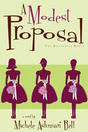
CONGRATULATIONS! The winner of our Little Lovie baby onesie giveaway is . . . THE JOHNSON FIVE!
Okay. I need The Johnson Five to email me at micheleabell@gmail.com and provide me with a mailing address and we'll send you your onesie and autographed copy of my book. Woo-hoo for you!
Next Monday I will announce the winner of the Jerry Borrowman book giveaway. There will be two winners so please make sure you enter. The entry rules are at the bottom of the Jerry Borrowman interview. His book is awesome!
From now on I will be devoting my Monday blog to giveaways, either from myself or from anyone I can get who will give something free away. So if you didn't win this time, we will be doing drawings and giveaways once a week.
Which means I am changing my blog days just a titch.
Monday - giveaway day
Wednesday - random post day (come on, I have to have a day to chat, right?)
Friday - interview day (usually on Thursday)
I'm so excited about all these fun new additions to my blog and am grateful you've been patient as it as morphed and evolved. I'm sure it will continue to do so, but in the meantime, enjoy the ride and hang on for the fun.
Wednesday I will be posting my complete book list and book order. I know it gets confusing sometimes so I will make it easy for you.
You guys are so awesome! I love getting to know you and appreciate you so much! Have a great day!
Monday, April 27, 2009

Thursday, April 23, 2009
Interview with Jerry Borrowman by Michele Ashman Bell

It is an honor for me to interview Brother Borrowman for my blog. I have been a huge fan of his since his first book, Three Against Hitler, was published. As a former missionary to Germany I learned first hand about the devastation suffered during the war and I spoke with countless survivors, mainly widows, who lost their husbands and sons, in battle. I developed a deep compassion and intense desire to learn about those survivors and the heroes who risked their lives to help others. Brother Borrowman's book, A Distant Prayer, is extremely powerful, telling the story of an American soldier, shot down behind enemy lines and suriviving as a prisoner of war. My life and heart have been touched by these amazing stories of amazing people.
On the back of the book is a wonderful synposis of the story.
Artie Call can't get a break. Orphaned during the Depression, he steals food to survive. When mischief lands him in juvenile court, he's offered a home by fellow ward member David Boone, but then suffers under Boone's unkind and unyielding treatment. And after Artie helps the victim of a robbery gone bad, he's abandoned by Boone and is almost sentenced to juvenile hall.
Then his luck and life suddenly change.
Mary Wilkerson, the feisty widow who was robbed, sees potential in Artie and takes him into her custody. Ray McCandless, the wise yet firm chauffeur, teaches Artie about cars, life, and the connections between the two. Under their care, Artie develops the desire and the ability to leave his past behind and grasp the hope in his future, which shines like Mary's luxurious Duesenberg. But when cornered by old enemies, will he defend his honor with his life?
Jerry Borrowman masterfully combines emotion, morality, suspense, and humor in this tender coming-of-age story. Readers will struggle and rejoice with Artie as he discovers the value of integrity, the sweetness of family ties, and the reality of the American dream. And they will never forget the triumph that unfolds when a good boy with bad problems is given one last chance.
There are also some wonderful endorsements of this book:
"Jerry's attention to detail will bring to life the excitement of seat-of-your-pants racing down the dusty roads of Idaho. You will smile, you will laugh, and you will be reminded of the Artie Calls in your own life. So hold on!! It's a wonderful ride." W. Kevin Marsh, automotive restoration specialist.
"Jerry Borrowman brings readers a touch of nostalgia for a time long past, when cars were grand, movies were only shown at theaters, and life moved at a slower pace. One Last Chance delivers a subtle reminder that personal honor; faith in God, and the love of family are the real antidotes to the worst social ills." Jennie Hansen, author of High Country
Here's a brief bio of Brother Borrowman:
"Jerry Borrowman was born and raised in Southeastern Idaho. He has written numerous articles in both Church and financial publications including the Church News and Ensign. His 'Til the Boys Come Home series has been a favorite in the LDS market. He and his wife, Marcella, live in Sandy, Utah."
Here's my interview with Brother Borrowman:
M.B.: When did you first know you wanted to be an author?
AUTHOR: My first hint was when I submitted an article to the Church News featuring a person that I admired. When the article came out exactly as I'd written it I was thrilled to think that something I felt was important could be shared and perhaps appreciated by others. For the next ten years I wrote articles occasionally, including a number in the Ensign. Then the chance came to help Rudi Wobbe tell his remarkable story of growing up in Nazi Germany where he two friends from his LDS ward decided to start a resistance effort against the government. Obviously the drama and sorrow in his story was worthy of a full book, which we wrote over the next three years, and Three Against Hitler went on to be a bestseller--still available fourteen years later. The impact of his story is ongoing -- we even won the National Award from the Freedoms Foundation at Valley Forge for contributing to the cause of freedom through our writing. President Dwight D. Eisenhower was the first recipient of this award.
M.B.: What was the pathway like for you to get your first book published?
AUTHOR: It was miserable. After finishing the manuscript for Three Against Hitler I felt it would be of interest to a national audience and submitted the story to more than 25 publishers. We were rejected by all of them. I then submitted it to Deseret Book and Bookcraft, who also turned it down. At that point I was despondent and let the manuscript sit for over a year. Rudi called me one day, having spoken with Elie Wiesel (internationally recognized Jewish author and survivor of the Holocaust) who encouraged him to keep at it until his story was published. Rudi said, "Jerry, what are we going to do with the manuscript?" I was exasperated, having been the one to receive all the rejection notices. "Maybe nothing, Rudi -- I'm told this type of story just isn't selling right now." In his strong German accent he replied, "That's just not good enough." So I told him that I would have the manuscript reviewed by some outside readers to see if it needed to be fixed somehow. Darin Rodriguez, an outstanding LDS author, and my wife Marcella then read it. Both commented that once they got past the history lesson at the beginning of the first chapter the story was really compelling. After cutting 60% of the first chapter, the next publisher we submitted it to accepted it.
I should say that this was a new area for Covenant Communications. Many years later I learned that in the final review meeting the vote actually went against publishing Three Against Hitler because it was so out of character with the type of works they were accustomed to publishing. It was at that point that Robby Nichols, vice president responsible for publicity and sales spoke up and said, "This is an important story and it should be told -- and we should tell it." The book went on to outsell all but a handful of their titles. In a very real sense I owe my writing career to Robby for standing up for us that day.
M.B.: Were you ever discouraged along the way? If so, how did you deal with it?
AUTHOR: I think the previous story speaks to early disappointments. But it wasn't over. Five years after Three Against Hitler, I was introduced to Joseph Banks who had served in the U.S. Army Air Forces in World War II. Joe's B-17 bomber was shot down behind German lines in the last year of the war, and Joe suffered terrible deprivation as a prisoner-of-war. In fact his life was preserved in miraculous circumstances a number of times. When I heard his story I felt a burning in my heart that this had to be shared with the world. But after writing it we were turned down by both Deseret Book and Covenant. I felt that was a terrible mistake on their part--somehow I knew that if the story made it into print it would inspire people around the world. So I pushed--first to do an abbreviated serialization of the story on Deseret Book's website for virtually no compensation. When that started to be successful I pressed to have it come out on at least audio, since the production costs are lower than a book. Deseret Book demurred. So I sought permission to send it back to Covenant. After some extensive discussions, DB gave me permission (which I will always appreciate). When Covenant read it the second time they decided to bring it out as a book. "A Distant Prayer -- Miracles of the 49th Combat Mission" was an instant success, coming out just weeks after 9/11. Hundreds of thousands of LDS and non-LDS readers have been inspired by Joe's remarkable story, and he has been invited to travel all over the country to speak to youth groups and firesides. It was traumatic for Joe to open up these old memories, but by doing so he actually inspired many veterans to finally talk to their own children about their experiences in the war.
This is being a long answer to your question, but I think it's important. At one point in this long process my wife asked me in kindness, "Why do you keep pressing this? Why not accept "no" and save yourself this aggravation?" I responded that I just knew this story needed to be shared, almost as if it was an obligation on my part to see it through. I'm glad it turned out so well.
After these successes you'd think it would get easier. But my first draft of 'Til the Boys Come Home, the first book in my four-book World War I and World War II fictional series was also rejected by one of the major publishers before finally being picked up by Covenant. The series has also done well very well and has been a great experience for me to write.
So, I guess the moral to the story is that if you believe in yourself, and if a reader's panel judges that your work is high quality, you just need to keep trying. Not all the manuscripts I've written have been published, but my new book, One Last Chance, will be number nine. I was pleased today when a reader said he thinks it's actually my best book yet. I am so grateful that people have chosen to buy and read my books. I love my readers.
M.B.: What is your writing schedule like?
AUTHOR: I tend to write in spurts. I have a full-time career that I enjoy, so writing is a hobby. Typically I'll develop an outline for the story and then mull it over in my mind for a month or so, jotting down thoughts as they come. Then I'll do the initial research needed for an historical novel. And then I'll write furiously until I've completed a few chapters. I usually do this while traveling to make use of the otherwise idle time in a hotel. Then it's back to the research and the cycle starts over.
M.B.: Where did your idea come from for this book?
AUTHOR: Believe it or not, I often start with technology (I love the technology of the late 19th and early 20th century). In this case I was rather emotionally exhausted after writing more than 2,200 pages about war and the magnificent men and women who served on our behalf. So I decided to see if I could come up with a story that featured some of the great classic cars of the Great Depression years.
At first I thought it would be a lighthearted tale of a boy growing up in Boise who has the chance to drive a Duesenberg (the ultimate American automobile). But as the characters began to reveal themselves it became a much deeper story about how people deal with crisis in their lives, and how a troubled young man's future could be changed by adults who took up his cause. In the end it has become one of my very favorite stories to write, filled with a lot of emotion.
M.B.: What was the research like for this book?
AUTHOR: I loved researching this book. I like setting my stories in the west (with a trip to New York City always included). So, I had to learn everything I could about Boise, Idaho where I lived for a short time while in college and near where my son Jeffrey and his wife Eden and daughter Maya (my one and only grandchild) now live. It's the perfect place for a story like this since Boise has always been a small city with a bigger city feel.
Then I had to learn about the era--movies, radio, trains, and the great classic automobiles -- Cadillacs, Lincolns, Chrysler Imperials, and especially the true masters of the time, Cords and Duesenbergs. Since not everyone knows what a Duesenberg is I should point out that was the classic car driven by movie stars, gangsters, and even Ab Jenkins whose Mormon Meteor (the fastest automobile in the world on the Bonneville Salt Flats) was a Duesenberg. At a cost of between $400,000 to $800,000 in today's dollars, it was truly one of the finest cars ever built.
Which brings me to research. Because of this book I had a private tour of the Auburn-Cord-Duesenberg museum at the original factory in Auburn, Indiana hosted by Jon Bill, the chief archivist. Then, in a thrilling turn of events, I met Kevin Marsh who had recently completed a full restoration of a classic Duesenberg owned by Richard Lossee as part of his private collection. Richard gave me the thrill of a lifetime when he allowed me to take a ride with Kevin in his magnificent 1929 Duesenberg convertible (Engine # J-249 and Chassis #2492).The ability to inspect one of these great cars first hand was invaluable to my writing. Both Jon Bill from Auburn and Kevin Marsh were kind enough to do a technical edit of my book to make sure I got the history right.
I suppose that's one of the things I love most about writing historical biography and fiction--so many people are willing to help and to share the unique knowledge they have about a topic or period of time. I love trying to bring history to life for my readers.
M.B.: What words of advice do you have for other writers who desire to
have their manuscripts become books in print?
AUTHOR: First, concentrate on the story. While the history is important, it's the story that will make people laugh, cry, become angry, and ultimately feel inspired. Second, form a good reader's panel of people who will be honest with you about your writing. I always have at least six or seven people read each manuscript before I submit it. My wife Marcella is sometimes my toughest editor, but she's also the one who loves me enough to tell me when something isn't working and needs to be changed. Third, stay at it. I've been rejected dozens and dozens of times. Yet I keep trying.
M.B.: What is your process of brainstorming a story? Do you just sit
down and write, waiting to see what happens next? Or do you outline
first?
AUTHOR: I'm an outline person. When the story starts to come together in my mind I write out a list of what I believe the chapter headings will be and then start to write notes on each chapter. But I can only do that so long before I have to just WRITE SOMETHING. You can always go back and change things, but only if you first get something tangible down on paper.
M.B.: Do you ever experience a snag in a story, a form of writer's
block? If so, how do you deal with it?
AUTHOR: Perhaps the hardest thing for me is giving names to my characters. Somehow I have to be able to picture the person in my mind, match up his name to the type of personality that begins to emerge, and to see how he or she interacts with other characters. I'm sometimes surprised that characters who I initially think will play an important role in a book begin to fade while others take on a major status. For those who have read 'Til the Boys Come Home, I thought that Danny O'Brian's mother would play a substantial role. But as time passed she simply faded away, which was sad for Danny since she didn't really stand up for him, save for one occasion.
As to writer's block--of course. Writing is hard work. Sometimes when I get writers block I'll move to a different chapter and work on that for awhile while I mull the problem that's got me stuck. A new solution almost always presents itself if I'll give it some time. On other occasions I just have to write even though I don't want to. It's easier to watch TV, but not nearly as satisfying in the end.
M.B.: Do you need absolute quiet to write? Do you listen to music when
you are writing?
AUTHOR: I either need quiet or instrumental music. I can't write with a television in the background or songs with words. Right now I'm listening to an instrumental version of "Come Thou Fount of Every Blessing" by David Tolk.
M.B.: What kinds of inspiration do you use during your story creation periods?
AUTHOR: Places, people, and things. All my writing is in an historical setting, so I try to find human accomplishments in that time and place that inspire me -- the Hoover Dam, an aircraft carrier and the men who serve on it, a motor torpedo boat and the crews who risked their lives every night to keep supplies flowing into England in World War II. Actually, finding inspiration is quite easy because there are so many inspiring people.
M.B.: Who has made the greatest difference for you as a writer?
AUTHOR: Having readers tell me how much one of my stories affect them. For example, just this week I received an email from a man who served in Vietnam. His father had served in World War II, and two of his sons are serving in Iraq. He wrote to tell me how much he enjoyed my 'Til the Boys Came Home Series and the way it honored the men who serve in the military. It's humbling to have veterans say such things and makes all the frustration worthwhile. The most moving experience I've ever had was when I received an anonymous letter after A Distant Prayer Came Out. A man wrote that earlier in the week he had been contemplating taking his own life. Then, when he read Joe Bank's story of being all alone as a prisoner-of-war in Germany, and how his life was saved by miraculous intervention in the most desperate of circumstances, he wrote, "I guess that if God can remember Joe Banks in the middle of war torn Germany, perhaps he can remember me." I wept because I know that He can. In a very real way He did.
M.B.: Do you use a critique group during the writing process? Why or why not?
AUTHOR: It's so hard to take criticism. My poor wife shudders when it's time for her to read a manuscript because she knows I'll get pouty when she tells me what's what. But I desperately need her and all the others on my readers panel to make sure I stay focused and interesting. I can't thank them enough.
M.B.: Anything about yourself that you would like readers to know about?
AUTHOR: I believe the best thing about my leading characters is that they are generally tolerant people. One of my heroes was a Church of England minister. In One Last Chance Artie's life is changed by a caring bishop, a loyal Teacher's Quorum president, and by a non-church-attending mentor who loved him for who he was. We all need each other and can find our lives enriched by people from all walks of life. I hope that sentiment is something I'll be remembered for.
M.B.: Any final words you would like to share
AUTHOR: Just how grateful I am to my publisher, Covenant Communications for doing all the work of bringing seven of my books to the public (and Deseret Book for "Beyond the Call of Duty"). I also appreciate the terrific people who work in the bookstores who have such cheerful attitudes and who point people towards the stories that they think will most appeal to that reader. Most of all I'm grateful for my readers. As a writer yourself, you know just how much you come to appreciate that unseen audience out there who chooses to read what you have to write. It gives added meaning to my life.
M.B.: Where can our readers go to find your books and order them?
AUTHOR: People can go to www.jerryborrowman.com to read sample chapters, view a synopsis of each book, and find links to various booksellers who sell online. Of course I think it's great when people find their way to one of the many bookstores that carry our books, including Seagull Book and Tape, Deseret Book, LDS Independent Booksellers, and occasionally WalMart, Barnes and Noble and other national chains.
Brother Borrowman has generously offered to give away one of his to blog readers.
To enter this contest, please follow the simple rules outlined below:
1) Add a link to this blog post on your blog, with a note about the contest.
2) Post a comment on here so I can visit your blog and see your entry.
That's it! The winner will be chosen at random by Brother Borrowman to receive the book! Winner will be announced next Thursday!
ALSO, check back Monday for the Baby onesie drawing!
Monday, April 20, 2009
FUN GIVEAWAY!!!!


My wonderful, awesome niece-in-law, Mandi (is that what I call my nephew's wife??????) anyhoo . . . has started an amazing business selling the cutest stuff ever for babies. It's called "Little Lovie" and it's about the cutest baby gear you could ever find. You can find car seat covers, canopies, sleepies, burp clothes, blankies and onesies.
Go to http://www.littleloviebabyboutique.blogspot.com/ and you can see all the pictures of her absolutely adorable baby items.
And, for all those who comment on this post, your name will go into a drawing and Mandi will giveaway one of her stinking cute onesies! So enter now and win! I'll also throw in an autographed copy of my newest relase, "A Modest Proposal."
The winner will be announced next Monday! Woo-hoo!!!!
Thursday, April 16, 2009
Interview with Kathi Peterson, author of The Forgotten Warrior

Sydney Morgan is no wimp. A black belt in karate, her defensive moves help keep her tough, even when her mom is diagnosed with cancer and her long-lost dad shows up to play nice guy. But when an unexpected gift transports her through space and time to the land of Zarahemla, Syd just might be in over her head. Accused of being a spy, she has to prove she’s no threat to the locals—including Captain Helaman himself!
As war quickly approaches, Helaman calls on Syd to help his stripling warriors prepare to fight. Torn between concern for her family and for her new friends, Syd musters her wits, strength, and faith to face the coming battle—but her feelings for Chief Warrior Tarik put her heart on the line. Who will survive the Lamanites’ fierce onslaught? And will Syd ever make it home again?
Author, Kathi Peterson, and I, go back a long way and not only am I a huge fan of hers, but we are also good friends. I met Kathi when I first began getting into writing. That was back in 1986 (I'll do that math for you -- 23 years ago!!!). I was just a beginner, looking for a place to learn and grow and Kathi was part of a wonderful group of women writers named Wasatch Mountain Fiction Writers. I was blessed to be asked to be part of their group and these amazing writers helped me hone my skills, learn how to "show" and not "tell", and a myriad of other skills I clearly needed to learn. I will forever be in their debt!
Kathi is loaded with creativity and you will find that her stories will cover a gamut of genres and styles. She is multi-talented and I predict she will have a long and prosperous writing career.
Here's my interview with Kathi:
M.B.: When did you first know you wanted to be an author?
AUTHOR: I've always loved to write stories, but I never thought about writing a novel until after I had my first baby. I had read all of Mary Stewart, Phyllis Whitney, Nora Lofts, Dorothy Eden that I could borrow from my mother. She finally told me, "Why don't you write a book?" So I gave it a shot. That first book was horrible. But I kept at it, and at it, and at it.
M.B.: What was the pathway like for you to get your first book published?
AUTHOR: My pathway was full of potholes, boulders, a couple of mountains and several valleys. I've had a few articles published in magazines, several small concept and biography books for children, but I still wanted to have a full length book in print. When I decided to write inspirational fiction, I finally found my voice. Plus I think after years and years of working on my craft things began to click in regards to plot, characterization, and writing stories that are bigger than life.
M.B.: Were you ever discouraged along the way? If so, how did you deal with it?
AUTHOR: Oh no, not me. I was never discouraged. NOT. Yes there were many, many times I felt discouraged. But learning to write a publishable story is kind of like playing golf. For quite a while all I could do was whiff the ball, but one day my driver hit it right in the center of the club and that little white ball soared down the course. What a beautiful sight. I'll never forget that feeling, just like I'll never forget the feeling when I first saw my book on a store shelf and I realized I'd finally hit a long drive with my writing. Dealing with discouragement is tough . Even after you're published there are still days filled with discouragement. The trick is to keep your eye on the ball. In other words, keep trying.
M.B.: What is your writing schedule like?
AUTHOR: Since the release of my book, my writing schedule has been topsy-turvy. What I'd like it to be is write in the morning, edit in the afternoon. That's a perfect day.
M.B.: Where did your idea come from for this book?
AUTHOR: My son suggested I write about the stripling warriors. I've always liked their story of courage and faith, but I wanted a young woman thrown into the mix, so I created Sydney Morgan. And she had to be knowledgeable in fighting and sense during Book of Mormon times most of the women did not fight in war, I knew she had to come from this time period.
M.B.: What words of advice do you have for other writers who desire tohave their manuscripts become books in print?
AUTHOR: Don't sit and wait to hear about the book you sent to the editor. Keep cranking them out so that when you receive a rejection, you're already involved with another book and the sting won't hurt quite so bad, plus you're able to look at the rejected book with a more critical eye since you've had time and distance away from it. Fix the problems, sent it out again, and start another book. And here's something very important: learn how to take criticism. Listen to critiques especially from editors and writers whose work you admire because once your book is published the criticism has just begun. People are going to review your book and not every one is going to like it. Those years of learning how to take criticism will come in handy.
M.B.: What is your process of brainstorming a story? Do you just sitdown and write, waiting to see what happens next? Or do you outlinefirst?
AUTHOR: I usually have an idea of what I want to write about. Many times I brainstorm with my family. All my children are adults now, and they give me great ideas to work with. I'm also a member in a terrific writer's group. Once my story is taking shape I can take it to them to help refine the plot if I need to. I've written books with an outline and without. It really depends on the book and the momentum I have going into it whether I outline.
M.B.: Do you ever experience a snag in a story, a form of writer'sblock? If so, how do you deal with it?
AUTHOR: Writer's block for me usually happens when I'm trying to make a character do something that they wouldn't or shouldn't do. In the book I just finished, I came across some wonderful information about Julia Caesar, daughter to Augustus Caesar. She started taking over the story and shutting out my protagonist. The story stopped. As soon as I realized what had happened I went back and put Julia in her place. Then the story took off again.
M.B.: Do you need absolute quiet to write? Do you listen to music whenyou are writing?
AUTHOR: If I'm creating, it has to be quiet. If I'm editing, I listen to the radio in the background.
M.B.: What kinds of inspiration do you use during your story creation periods?
AUTHOR: Research helps a great deal. Sounds boring, but it really isn't because as I'm weeding through the information trying to find certain facts, I'll sometimes come across something that will make the story stronger. Makes my day when that happens.
M.B.: Who has made the greatest difference for you as a writer?
AUTHOR: The greatest difference, my mother who suggested I write a book. But I would have stopped many times since then if it weren't for my family and the writing community I surround myself with. My husband and children have always been supportive. My writing friends are super! Some I've known for over twenty years. My editor has been very supportive and encourages me to keep working.
M.B.: Do you use a critique group during the writing process? Why or why not?
AUTHOR: Definitely. My stories always sound good until I'm reading them out loud at group. Suddenly I can see mistakes I couldn't in the comfort of my office. Plus, my critique group helps firm up weak spots I couldn't see. And when they like a scene, that is a great day!
M.B.: Anything about yourself that you would like readers to know about?
AUTHOR:
M.B.: Any final words you would like to share
AUTHOR: I'm holding The Latter-day Stripling Warrior Contest which ends April 15th. Nominate a youth between 8 to 18, young man or young woman, who has done a kindly deed. For every entry I receive I will send a certificate that says...Johnny/Joannie is a Latter-day Stripling Warrior. More details can be found on my blog www.kathiswritingnook.com or website wwwkathiorampeterson.com.
M.B.: Where can our readers go to find your books and order them?
AUTHOR: My books are at Deseret Book and Seagull Book Stores.
Please add any other information, like a brief bio or bookdescription, that you would like.(I loved what DB put in the conference catalog. Can I just use that without getting into trouble?)After touching a mysterious clear stone, Sydney Morgan is transported through space and time to the land of Zarahemla. As war quickly approaches, Captain Helaman calls on Syd to help his stripling warriors prepare for battle. Follow Sydney as she desperately tries to find her way home, works to gain Helaman's respect, and, despite her best intentions, falls in love.(If you need me to write something different let me know.)
Wednesday, April 15, 2009
The book drought is over!

I just found out today that my next book in the Butterfly Box series was accepted. I am so excited! This book is Jocelyn's story. In this book you find out a little more about the circumstances surrounding Ava's death. You get to know a little more about each of the Butterfly Girls and what's going on in their lives. And . . . you get to know Jocelyn's secret! Of course, the book will steer us towards the next book, which will be Andi's story.
For those of you who may not know how this process of manuscript acceptance works, basically, I still have to submit my manuscript to my editor, who then sends it out to evaluators, who then give feedback and say whether they think the book will be successful. I still get things rejected so there is no guarantee that something I write will get accepted. That's why it's always so exciting when I get that wonderful email or phone call telling me the grand news.
I will be running a fun contest soon in conjunction with my first book, as soon as I get the release date for the next book, title still unknown.
Until then, I'm doing the happy dance. Even if it is snowing!
Subscribe to:
Posts (Atom)





 Posts